About Us
The Ward Soil Conservation District is a county entity that is a political subdivision governed by the state. The Soil Conservation Districts are governed by a board of five supervisors, three of which are elected by local voters and two are appointed by the board.
The main goal of the Ward Soil Conservation District is to help farmers, ranchers, and landowners practice conservation by engaging with the producers in voluntary actions that keep our air, water, soil, habitats, pasture, and farmland healthy. This can all be done by the district as we offer a variety of resources, expertise, and funding opportunities.
Ward Soil Conservation District is working hard to create a place where we can help producers practice better conservation. We also want to help educate our producers, youth, and urban citizens. We want to see our rural and urban populations coexist with one another and have a great understanding of the importance of conservation and how it affects us all. We make this happen through our services offered, educational outreach programs, and hardworking staff.
The Soil Conservation District cannot provide the allocated funds to help producers with their practices alone, so funding comes from mill levies in the boundaries of the district and by partnering with the Natural Resource Conservation Service (NRCS) and receiving cost-share assistance.
The NRCS is a federal government entity that provides both technical and financial assistance to landowners and land managers through Farm Bill programs for the benefit of farm, ranch, watershed, and the community. Additional easement programs are also available to provide long-term management options.
The Ward Soil Conservation District currently offers Tree Planting by machine, Weed Barrier Installation, Pipeline Plow services for shallow waterline, Tilling, Casoron Spreading and Water Testing. At Ward Soil, we are always looking for ways to expand and offer our producers with every opportunity that we can to help them in their conservation practices.
Supervisory Board
Ward Soil Conservation District’s board is made up of the five individuals:
Mark Schumaker – Chariman
Mike Aamot – Vice Chairman
Dave Colby
Karlee Rauschenberger
Jessie Bock
STAFF
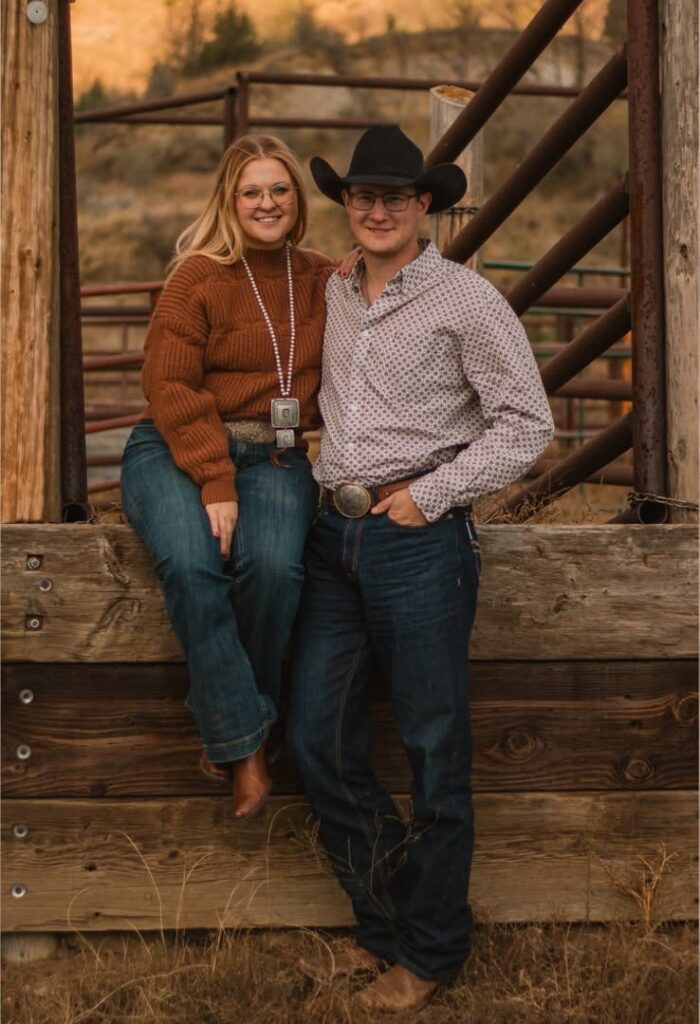
Connor Myers
Hello! I am Connor Myers, and I’m proud to introduce myself as the new Ward Soil Conservation District Manager! Soil, Water, and Range Conservation have made a major impact on my life, and I am happy to continue working in an industry where we can implement these ideas with friends and neighbors.
I grew up just southwest of Berthold, working on a commercial cattle operation with my parents. My fiancé Lily and I just recently moved to a homestead a few miles south of where I grew up, giving us the ability to continue working on the ranch while having our own space to grow. I attended school at the Dakota College in Bottineau and Dickinson State University to purse my Bachelors in Natural Resource Management. I also worked as a Pathways Intern with the North Dakota NRCS for 3 years.
Outside of work, I am an avid fisherman, especially ice fishing and spearing. I love to watch sports, being an avid Clevland football and baseball fan, enjoying the Vegas Golden Knights hockey team, and following the PRCA rodeo circuit.
I am excited to begin my work with producers in and around Ward County, and cant wait to turn a new leaf in conservation in Ward County. Please reach out to me by phone, or feel free to stop in the office at any time!
– Connor T Myers
Justine Sveet
Born and raised by farmers in North Dakota, Justine understands the tempo and values of farming life. She brings extensive management and coordination experience to the district. As the bookkeeper, she ensures our money is serving the people of the county and the financial functions are up to snuff. Her favorite part of the job is interacting with the farmers and ranchers.
Our History
Have you ever wondered how soil conservation started in our area? The Great Depression of the 1930’s was a catastrophic event. Whether you experienced it yourself or heard the stories from relatives, it was an unforgettable time for our country. Soils were extremely dry, farmlands were overworked, there was a lack of trees for protection.
Soil conservation was not always practiced in our nation like it is today. The significant damage that was done to agricultural productivity in the Midwest in an event known as the Dust Bowl, during which time soil was swept off the fields into dust clouds that destroyed crops and reduced land productivity. Before this act was adopted, farmers had no reason to conserve land, and the economic incentive to produce as much food as possible to sell at market drove the agricultural industry to use all available land for growing, rather than letting fields rest or rotating crops. The farming methods of the time showed little consideration for the quality of the soil, which eventually became thin and nutrient poor.
The Soil Conservation Act of 1935 was enacted on April 27, 1935, and established the Soil Conservation Service, which sought to “control floods, prevent impairment of reservoirs and maintain the navigability of rivers and harbors, protect public health, public lands and relieve unemployment.” These practices were a fundamental start to conservation efforts after the effects of the 1930’s wreaked havoc on the land and the livelihood of so many in our nation.
Demonstration farms were put into place for farmers and ranchers to see how the conservation practices would work. The Soil Conservation Act became law and was adopted in North Dakota in 1937. North Dakota then was divided into five areas. Ward County was in Area Three. A supervisory board of five members was created to help producers practice these new conservation efforts.
In 1946 Gooseneck Soil Conservation District, East Ward Soil Conservation District, and Midland Conservation District were all formed. In 1947 Southwest Ward Conservation District was also formed. In the year 1959 the Midland, East Ward, and Southwest Ward SCD were all consolidated into the Ward Soil Conservation District. In 1948 the Oaks Nursery was created, and it was expanded on in 1949. 1951 is a year of significance because the state passed a law to provide teaching of conservation in schools. This is something Ward SCD finds extremely important even now. 1953 opened the door to another nursery, Fort Lincoln Nursery. 1955 expanded avenues to the community, not just producers, by developing land judging and appreciation schools. In 1964 the two separate nurseries were turned into one, known as Lincoln-Oaks Nursery. In 1960 a group formed the Ladies Auxiliary.
Over the years, the Soil Conservation Districts have been able to implement many more conservation effort practices. Ward Soil Conservation District is proud to look back at the history of conservation and see how far the districts and our country have come, how much effort has been put in, and the expansion of knowledge for the producers to continue these conservation practices. We strive to give the same commitment today as we did in the past.